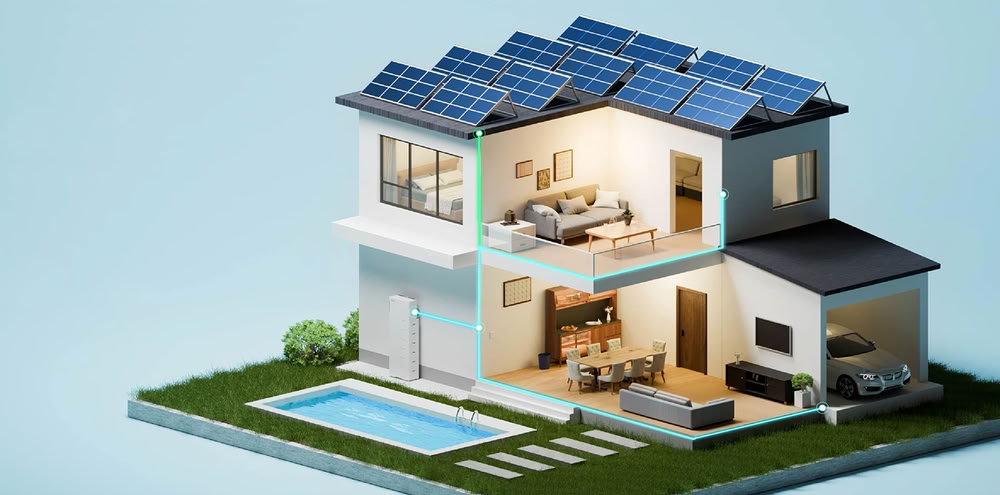
The old answer to outage planning was simple: buy a generator and keep fuel nearby. That still works for many homes. But in neighborhoods with rooftop solar, EV chargers, and time-of-use rates, the backup conversation has become less about one machine in the yard and more about how the house manages power every day.
A whole-home battery backup is a storage system sized to support most or all household loads during an outage. A generator makes electricity from fuel. Both can keep lights on. They fail in different ways, cost money in different places, and fit different lifestyles.
Runtime Is Not the Same as Reliability
Generators are attractive because they can run for a long time if fuel is available and maintenance has been done. The tradeoff is noise, exhaust, oil changes, startup checks, and fuel logistics. During wide-area storms, fuel can become its own problem.
Batteries are quiet and automatic. They can also be used outside of outages for solar self-consumption or time-of-use shifting. Their limit is stored energy. Once the battery is depleted, it needs solar, the grid, or another charging source.
The National Renewable Energy Laboratory separates battery “power capacity” from “energy capacity.” That distinction matters in whole-home backup. A system may have enough kWh to last through the night, but if its kW output is too low, it may not start a large air conditioner or well pump.
What Homeowners Usually Forget
The biggest mistake is designing for normal life without discussing outage behavior. In a blackout, people change habits. They may delay laundry, avoid oven use, keep the thermostat modest, and unplug nonessential loads. A battery system sized around that realistic behavior can be far more affordable than one sized for every appliance at once.
A generator has its own behavioral limits. It may not start if neglected, it needs safe exhaust clearance, and it may be restricted by local noise rules or fuel storage limits. The Department of Energy has noted in resilience discussions that conventional backup generators do not always perform during grid loss, especially when maintenance is poor.
That is why some homeowners look at ESYsunhome and similar storage manufacturers not as generator replacements in every case, but as part of a broader energy plan.
Where Batteries Pull Ahead
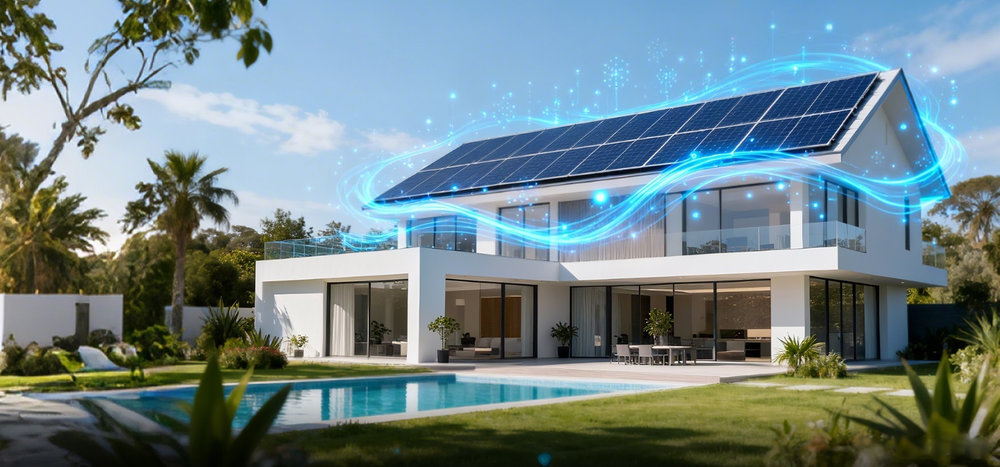
Batteries are strongest when the home already has solar, when outages are short to moderate, when the owner values quiet operation, or when daily rate optimization matters. They also work well for homes that want automatic backup without running engines.
For larger houses with three-phase service, bigger HVAC loads, or a desire to support more circuits, product class matters. The HM20 three-phase home ESS is an example of a higher-output residential platform designed for demanding backup and energy-management projects.
Where Generators Still Make Sense
Generators still have a place in long outages, cold climates with major heating loads, remote areas with poor solar production, and sites where fuel is easy to store. In those cases, a hybrid strategy can be more realistic than a forced either-or choice.
The most practical design may use batteries for instant backup and daily energy shifting, solar for daytime recharge, and a generator as a last-resort charging source. That keeps the generator from running constantly while giving the battery more endurance.
No single backup system is the right answer for every house. The stronger choice is the one matched to outage length, load priorities, maintenance tolerance, fuel access, and the way the household actually uses electricity.